
NEWS & RESEARCH

Winchester's Hidden History: Chesil Street Tunnel
Can you name every heritage site in Winchester?
Can you name every heritage site in Winchester?
A few months ago I was naïve enough to answer yes to this question that was until I discovered the Chesil Street Tunnel. One of Winchester’s better kept secrets. Now many students will study at the university; see the Cathedral, wander through the barracks and think they’ve seen it all. Perhaps a resident takes notice of the Buttercross on their way to work, has been to the Great Hall once or twice but doesn’t realise the city’s hidden history. Now this article’s subject matter is not to be confused with the mysterious labyrinth of tunnels under the city. We’re going to be investigating Winchester’s forgotten second railway.
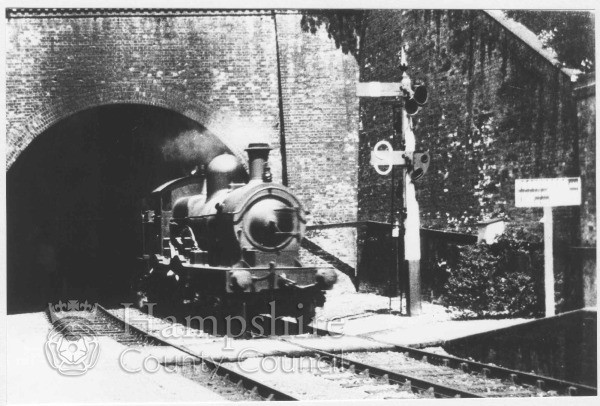
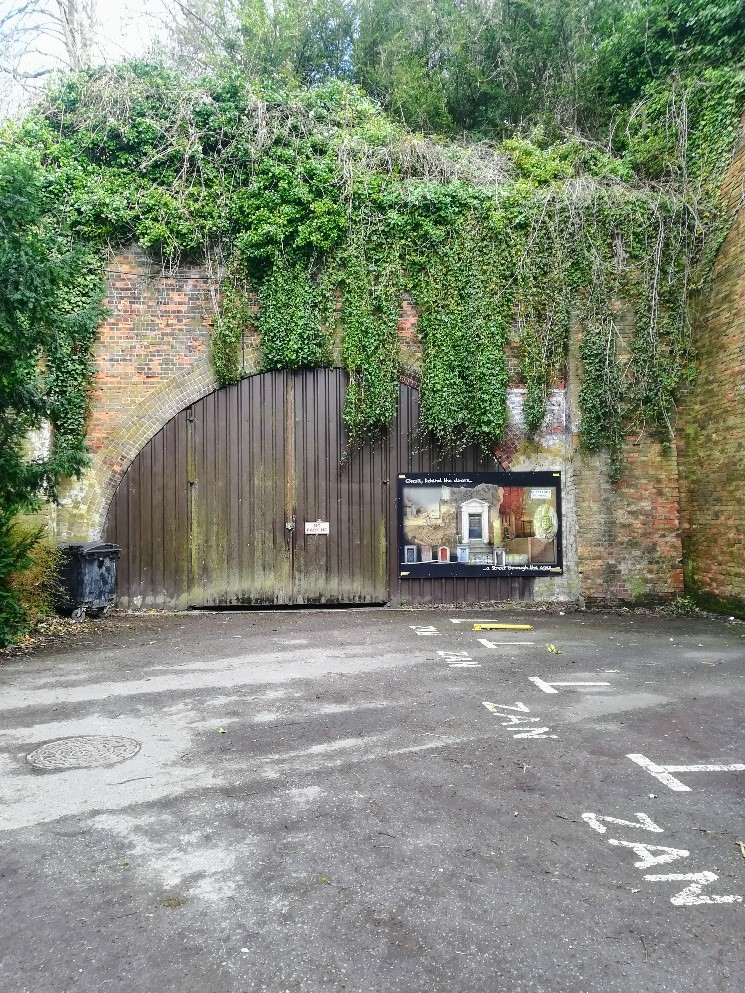
Photos 1 and 2
In 1873 a parliamentary bill was submitted for the construction of Winchester Cheesehill (Chesil) Station. On the 4th May 1885 it opened. Part of the Didcot, Newbury and Southampton Railway (DNSR – operated by Great Western Railway), Winchester was considered to be the most important station on the line. Located at the east side of the city, in what is now the Chesil Street Car Park. The original station was only able to reach as far as Bar End due to unfortunate financial difficulty and meant the DSNR’s race to reach Southampton was put on hold.
Fifteen staff members established this forgotten station as the largest in the city at the time. Amongst the staff were clerks, cleaners, firemen and porters to the guards, drivers and warehouse-men. Historical rumours in the city mention a station cat who was even known to ‘sport the correct attire’!

Photo courtesy of Hantsphere and is of the Chesil Station Staff.
In the past the Hampshire Chronicle have expressed the importance of the Winchester Chesil Station in the deployment of troops during D-Day in the summer of 1944. Unfortunately the Chesil Line would later become a victim of the 1960 Beeching Cuts although the line would continue to transport a variety of goods until the mid to late 60’s. Economic issues and rising labour costs suggested the Beeching Axe was the quickest way to minimise losses. The chairmen of the British Transport Commission stated that the number of railway staff members had fallen by a huge 26%. A crazy statistic but considering the increasing competition it’s not surprising!
Looking at Chesil Street and Bar End today, it’s quite hard to imagine these streets were once home to such a busy railway line. The station itself had a history of closing and reopening from 1942 through to the final closure on 7th March 1960 but even then it reopened the following two summers. They just couldn’t make their minds up apparently!

Photo courtesy of Hantsphere, Hampshire County Council website. Photo is of the centenary celebration at Chesil Station.
For those wanting to discover the remains of this hidden gem, head straight down to the Chesil Street Car Park. After a bit of walking around the area you can discover old gauge ties still visible in the fencing along the paths. Little reminders of the old company. Take note that the GWR colours were cream and brown whilst the LSNR were green, a tip for spotting others across the city. How many clues to the railway’s existence can you find?
A great mural can be found inside the car park of a steam train, a subtle reminder of the rich background the area once had. Little exists of the line in the present day, the Chesil Tunnel is one of few places that remain. Open annually, a guided tour each summer allows visitors to walk where the line once ran. I myself went for a look with the Manager of the site, Doug Ross. A special thanks to Doug for allowing me to explore.
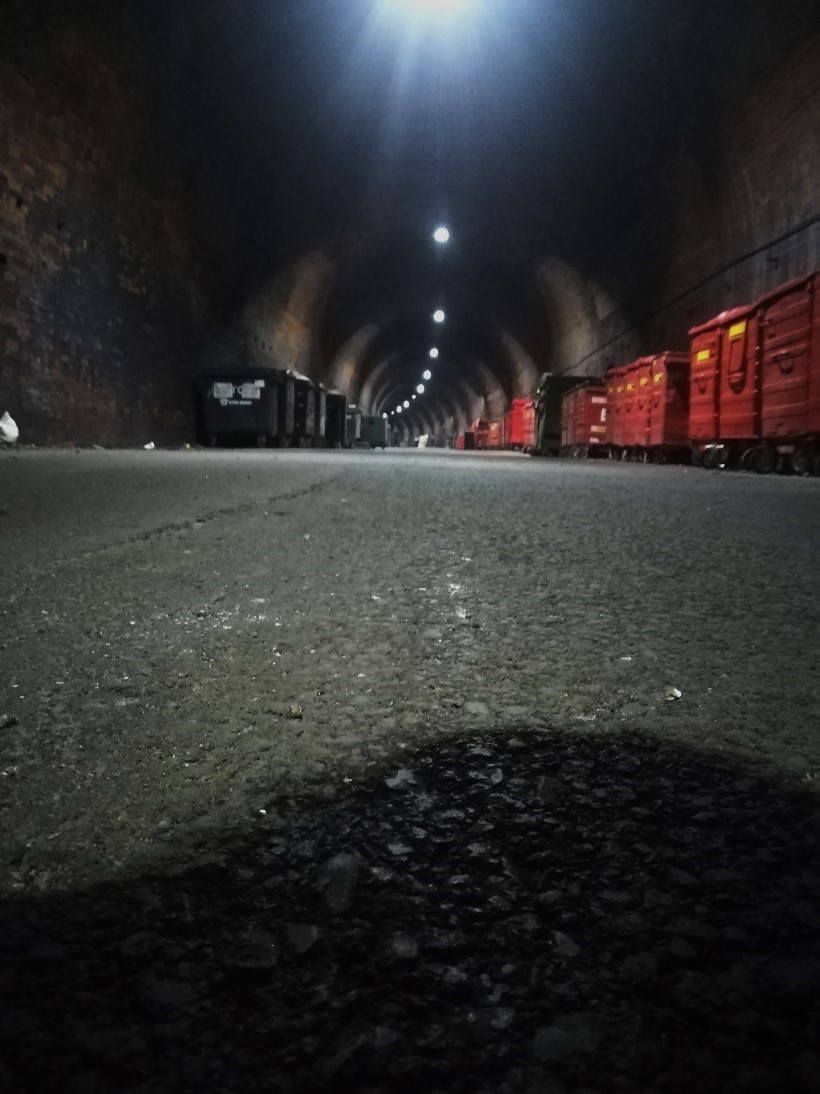
Photo taken by Maia inside the existing Chesil railway tunnel.
Now used by Winchester City Council for storage, the tunnel evokes many emotions throughout your trip. Being in the tunnel, so far under St Giles Hill allows the average person to connect with a lost piece of the city. It’s somewhat forgotten past is displayed through original brickwork to vintage lighting fixtures that line the tunnel’s ceiling, each flickering on and following the curve of the tunnel in succession.
What should be noted is the sensation of being in a place quite so hidden. Trying not to forget all those who had traveled through this tunnel to Winchester. All those who had built the railway line and all those that had worked there and their untold stories.
All that remains today is the tunnel and the photographs of the staff that operated Chesil Station, regrettably no sign of the station’s cat. It is bittersweet that the original platform no longer exists today but join us in retelling the story of this city’s hidden treasure.
Maia Pearce
Photo 1 is courtesy of Hantsphere and Hampshire County Council and depicts a steam train leaving the existing tunnel.
Photo 2 was courtesy of Maia Pearce and allows for a side-by-side comparison of the site in the present day, now completely unrecognisable.

What's your favourite season?
A reminder that the closing date is fast approaching for Keats 200: A Competition for Young Artists and Writers living or studying in Hampshire.
200 years ago, John Keats was inspired to write his best-loved poem To Autumn during a visit to Winchester.
Now you can be inspired by Keats!
We invite you to write a poem or create a picture celebrating “The Seasons in Hampshire.”



An exhibition of entries selected for judging will take place at City Museum, Winchester, from 13 – 29 September 2019.
The winners and runners-up will be announced at an awards ceremony at City Museum on Sunday 29 September.
The competition is free and open to any young person in the three specified age categories who lives or studies in Hampshire.
Poetry entries can be submitted online or by post; art entries can be submitted by post only.
The poem should be no longer than 14 lines, in English, be the entrant’s own work and should not have been published elsewhere, including online, and not have won any other competition. You may enter more than one poem if you wish.
Artwork should be on one side of an A4 size paper, be the entrant’s own work and should not have been on display elsewhere, including online, and not have won any other competition. Any materials can be used but computer generated entries will not be accepted. Please do not mark the front of your artwork, but on the back add your name, age, contact details and title of your work.
Closing date: midnight GMT 31 July 2019.
No changes can be made once entries have been submitted.
The decision of the judges is final and no correspondence will be entered into.
The winners will be contacted by email or post and announced at the City Museum, Winchester on Sunday 29th September 2019.
Only two months to go!
On 13th September the festival doors open, have you started planning your 2019 Heritage Open Days experience yet?!
On 13th September the festival doors open and the first of our 140+ events to celebrate our local heritage, culture and history starts.

So we thought today, with less than two months to go, would be a great time to open our box office for our mailing list supporters.
It is FREE to subscribe to the mailing list, and benefits include
Advance booking of festival events
12 newsletters per year
Notifications direct to your inbox of changes and additions to the programme
If you are not already a member sign up today by entering your email in the box at the bottom of this page or by clicking here.
We hope you will join more than 600 other supporters as this year is Heritage Open Days’ 25th Anniversary and there is much to celebrate from Keats200, People Power, the First 100 Years of Women in Law, the centenary of Women’s Engineering Society and a Food & Drink theme.
With plenty of activities for children and families, performances, exhibitions, activities, talks and tours, you are bound to find something to appeal to you and your family. Why not invite friends who are not lucky enough to live in Hampshire to come and join in the fun?
Festival programmes are available from Winchester Tourist Information and the Discovery Centre, or you can check it out online.

Festival Newsletter - June 2019!
Not only is the latest newsletter out, but our printed programmes will be available this weekend!
Did you know we have a festival newsletter?
Our latest one was issued 24th June, you can read it here.
Not only is it the best way to discover what it going on, but everyone on our mailing list will be able to access the box office from early July, compared to the 7th August for the general public. So if you are not already on our mailing list, what are you waiting for?!
Enter your email below. We will not share your email address with anyone else, and will only use it to send you our newsletter. Max of 12 newsletters per year.

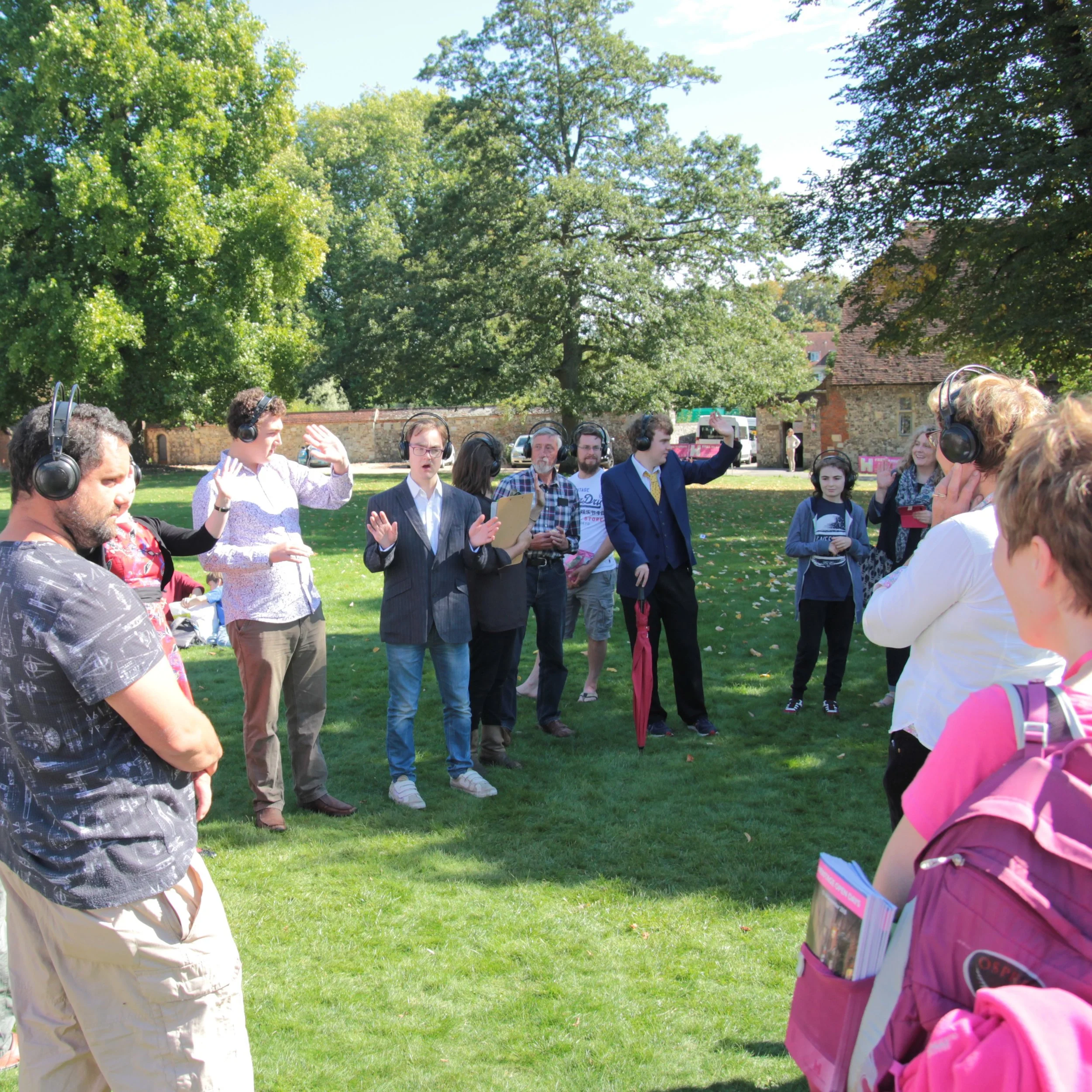
We will be in St Maurice's Covert on Winchester High Street on Saturday 29th and Sunday 30th June (9am to 3pm) handing out FREE copies of this year's programme!
It also a great opportunity to ask us any questions about the newsletter or the programme. Look out for us opposite Marks and Spencer, we will be wearing our signature HODs t-shirts!
If you get there early enough you may even spot the HODs gnomes.
And if you are not in Winchester this weekend, don’t worry copies of the programme will be available from venues in and around Winchester from 1st July, and you can also download a copy from the website.

Our historic streets - as seen through the eyes of a local graduate
We’re delighted to share a post by Maia Pearce, one of our graduate volunteers. Maia is a Heritage Management Masters Student at the University of Winchester. Specialising in illicit antiquities, art & artefact forgeries in the UK and internationally.
Winchester is the kind of city that has always displayed a wealth of heritage, distinguished with its medieval links and celebration of culture. Which is the reason you need to take a look at the businesses and historic streets of the city. Newly opened Incognito, the cocktail, prosecco and gin parlour located on The Broadway, offers the city ‘old fashioned glamour’. This roaring 20’s inspired establishment provides an array of hats for the guests and boasts an excess of over 50 gins. With signature cocktails, vodka and rum to world whiskies, wine and a carefully selected gin menu, the diverse range caters to all tastes. Each signature cocktail follows the historical trend with an engaging tale and some adorned with botanical garnishes. The venue, open 7 days a week, provides live piano performances giving guests a taste of a Jazz Age experience. What is most notable about Incognito however, is the story of Chadwick Smithfield, the supposed cat and owner. His character’s story is intriguing. His anecdotes visible in his drinks menus, allowing the guests to become part of his narrative. The parlour claims to possess a 200 year old copy of William Hogarth’s ‘Beer Street’, a print in support of the 1751 Gin Act. Definitely worth a look on a visit there.
The Ivy Winchester Brasserie with its Parisian styled terrace and art deco influenced furnishings is another popular business. The modern British restaurant can be found on the historic High Street. The original Ivy was established in 1917 by Abel Giandellini and the brand has maintained a high standing amongst celebrities and more recently in media circles. For those wanting a glamorous photo for their Instagram pages this should be your first stop! Following suit, Greens Bar & Kitchen located on the significantly historic Jewry Street is a family run business. As one of the longest running bars in Winchester it is celebrating over 25 years of trade. The venue is popular for its food and active nightlife, with cuisine evenings every last Thursday of the month. The servers are attentive and one trip allows you to understand why this particular bar has outlasted and maintains its popularity amongst countless in the city.

Photograph by Maia
A few doors down from Greens visitors will find The Old Gaol House, now another pub in the Wetherspoons brand, the original building was once a debtor’s prison. Built in 1805, the grade II listed building shows an influence of G Dance’s 1770 Newgate Prison. The frontage most notably was designed by the architect George Moneypenny who was quite prominent in the 19 th century. The building was criticised as being too grandiose for prisoners but in the modern day seems somewhat simple when in comparison to the stylish Turtle Bay down the street. Warren & Son is yet another business that holds historical links to the city, the current location of the stationers on the High Street offers a look into the past. The building was once the local court house and home to the prison governor. A more interesting aspect are the traces of underground tunnels in the cellar of the building which would originally have led to the city prison on Jewry Street. For those wanting to further their knowledge on these long established Winchester businesses it is a great idea to book onto one of the talks on our future events.
Or better yet try your hand at some medieval board games at The Royal Oak, the pub that brands itself as the ‘oldest bar in England’. Once the residency of Queen Emma of Normandy and recently featured on Channel 4’s ‘Britain’s Most Historic Towns’. Historically frequented by royalists, guests are invited to visit from 11am until 12am most days.

Another beautiful photograph by Maia
When walking down Jewry Street you can see the architectural influence of Renaissance Italy and the Roman styled columns on the Corn Exchange so it is safe to assume that it has quite a heritage. But Jewry Street is most noteworthy for its Jewish history. Jews occupied in and around this street for centuries with synagogues being built close by. The Jews were famous for their financial acumen but were hated by certain members of the aristocracy. One distinguished Jewish woman, who has been explored in previous festival events, is Licoricia of Winchester. As a moneylender Licoricia made prominent name for herself amongst her community and across the country. Some have even gone as far as to name her the ‘Richest Jew in Winchester’. From records it is known that she lived on Jewry Street and as the most notable Jewish woman in the country many books have been published about her story. This medieval financer became famous for her somewhat strategic and advantageous marriages and overall smart thinking that brought her to wealth in 13th century England. Licoricia’s medieval business success saw her make important business contacts and even close relationships with the aristocracy most surprisingly King Henry III. This was until her untimely death in 1277 where she was found murdered alongside her Christian maid, Alice of Bickton.
Licoricia is also known for her marriage to David of Oxford in 1242 who some proclaim was in fact the ‘Richest Jew in England’ so together they made quite a formidable force. She had dealings with Simon de Montfort, 6 th Earl of Leicester alongside other wealthy clientele. Later in her life she was confined to the Tower of London whereby the king used this to ensure that a large sum of her late husband’s fortune could be taken and used to rebuild Westminster Abbey. With her later undertaking business ventures of her own on her return to Winchester.

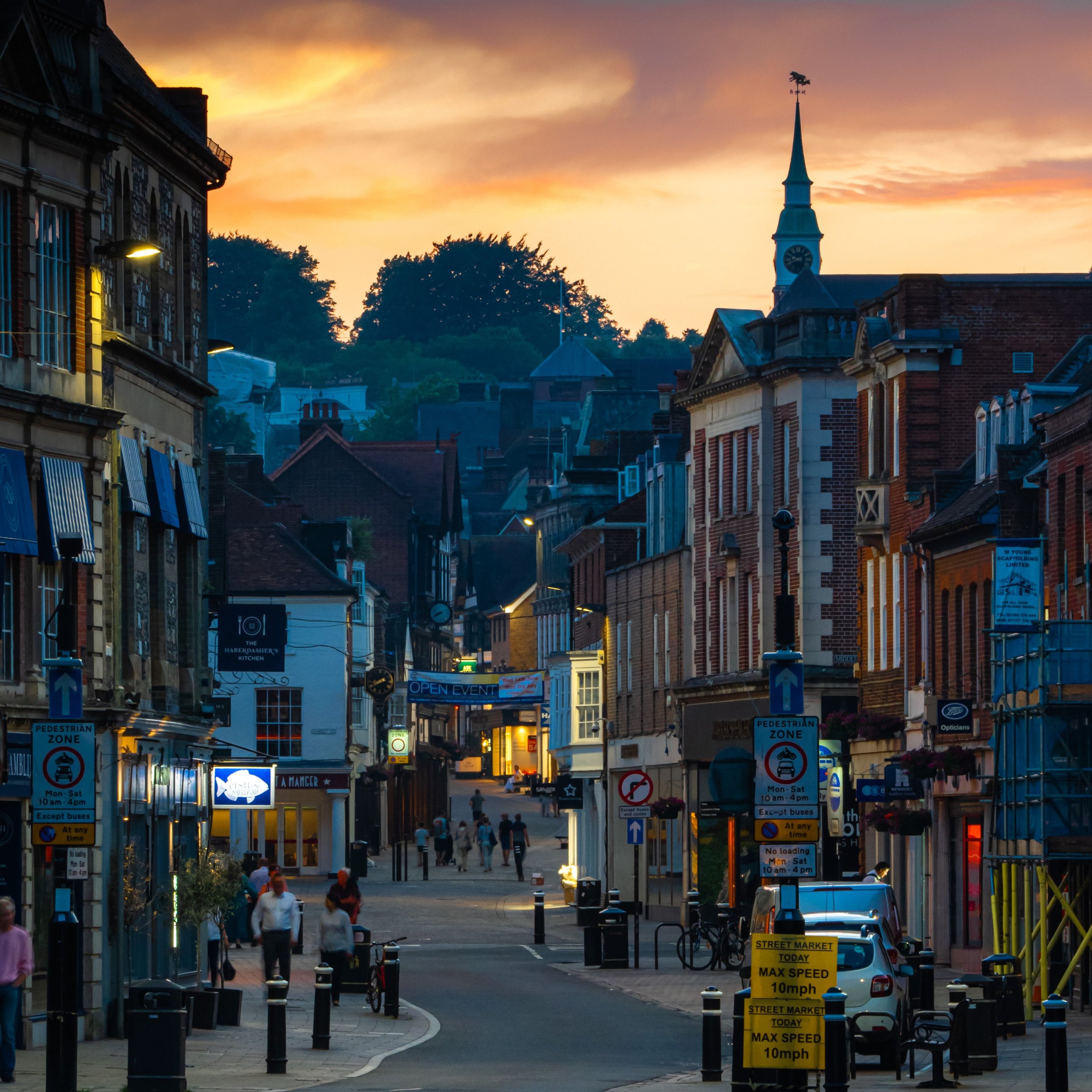
Jewry Street, Winchester
There are many businesses and even more figures of Winchester that can be celebrated. But getting a better understanding of the heritage behind Winchester’s most famous streets is a great place to begin. Hopefully via Heritage Open Days we’re helping to prove that even in 2019 Winchester celebrates its heritage whether that be the thriving modern businesses, the architecture or giving a nod to the extraordinary people and history of Winchester.

Maia Pearce