

Winchester and Westminster: How Did These Churches Forget Mary I?
The life of Mary I has deep connections with both Winchester Cathedral and Westminster Abbey. How was she forgotten by these churches? Johanna Strong uncovers the truth.
The life of Mary I has deep connections with both Winchester Cathedral and Westminster Abbey. How was she forgotten by these churches? Johanna Strong uncovers the truth.
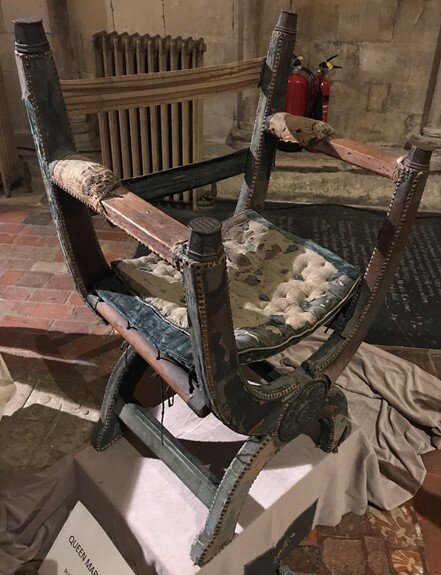
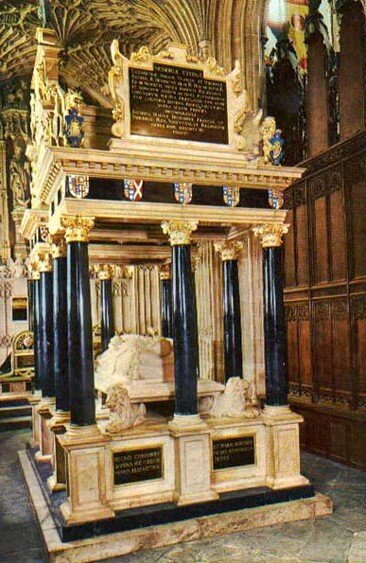
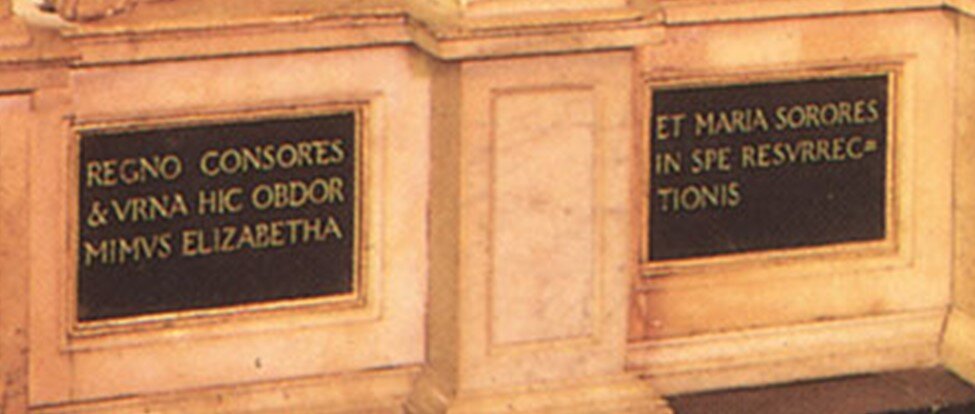
This podcast looks at the ways in which Mary I, first crowned queen regnant of England, is remembered in Westminster Abbey – the site of her coronation and burial – and in Winchester Cathedral – the site of her marriage to Philip II of Spain. Mary’s presence is not physically easily evident in either church which is in itself a representation of her legacy in the historical narrative.
*Johanna was rounding up in the episode. It has actually been 462 years since her death.

For more on Mary and Philip’s wedding and marriage, look out for Johanna’s chapter “Happily Ever After?: Elizabethan Representations of Mary I and Philip II’s Marriage” in Valerie Schutte and Jessica S. Hower’s edited collection ‘Writing Mary I: History, Historiography, and Fiction’, due to be published in late 2021.

FURTHER RESOURCES AND A CALL TO ACTION!
To hear more about Johanna’s research, follow her Instagram or her Twitter where she’d be happy to answer any and all questions about her research!
The original recording of this podcast was produced for the 2020 Winchester Heritage Open Days by a small team of students at the University of Winchester. We would like to thank again the following individuals for their contributions: Johanna Strong, Charlotte Tindle and Abbie Cooley.

Warfare in Winchester: Empress Matilda’s Last Stand
As civil war rages across England, Empress Matilda and her forces lay siege to the key city of Winchester. Who will emerge victorious when her opponents strike back?
As civil war rages across England, Empress Matilda and her forces lay siege to the key city of Winchester. Who will emerge victorious when her opponents strike back?
After Empress Matilda fails to gain the support of London and is chased out by its inhabitants, she journeys to Winchester and makes her camp there. Join Catherine Capel as she explores the events leading up to this moment and analyses the Empress’ decision to make the city her base of operations.
In Winchester, arrows will fly, blades will clash, and blood will spill, but only one side will come out on top.

Catherine Capel is in her third year of a full time PhD at the University of Winchester, which she was awarded in 2018 as a full studentship. Her primary research interest focuses upon the participation and motivation of elite Anglo-Norman women in warfare, but she is also interested in notions of female power and reputation.
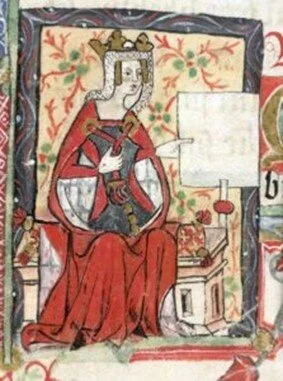
Empress Matilda from a 15th Century manuscript image

Queen Matilda from Agnes Stricklands ‘Lives of the Queens of England: From the Norman Conquest’
FURTHER RESOURCES AND A CALL TO ACTION!
Follow Catherine Capel on Twitter.
Learn more about Empress Matilda’s fight for the English throne here.
The original recording of this podcast was produced for the 2020 Winchester Heritage Open Days by a small team of students at the University of Winchester. We would like to thank again the following individuals for their contributions: Catherine Capel, Charlotte Tindle and Hannah Bell.

A Modern Take on Historical Drinks: 'for the bold and curious'!
Eoghan Proudfoot, founder of Proudfoot & Co, explores the traditional methods he uses to preserve British culture and create distinctive drinks.
One of our most popular events from the 2020 Winchester Open Days Festival was a live streamed event with Eoghan, founder of Proudfoot & Co. We were therefore delighted Eoghan met up with food historian and HistBites podcaster, Emma Cornell-Stoffer and discussed our incredible British culinary heritage.
In this wonderful podcast they explore the history of the British pantry, and take us into the fascinating and innovative world of foraging, fermenting and barrel-ageing.
Proudfoot & Co are based on St Thomas Street in Winchester, and all of their creations are non-alcoholic for a more inclusive and unique drinking experience. Find out more here at www.proudfootco.uk
“We preserve the past to innovate for the future. Whether foraging, fermenting, or barrel-aging, we combine rare ingredients with lost techniques to create one-of-a-kind drinks #fortheboldandcurious.”


Eoghan Proudfoot is the founder of Proudfoot & Co., a British drinks innovator in the heart of historic Winchester.
Whether foraging, fermenting, or barrel-aging, Eoghan is constantly on a mission to resurrect lost British ingredients and techniques. He reinvents them for the 21st century, creating one-of-a-kind non-alcoholic drinks #fortheboldandcurious.
Eoghan also fights against the degradation of Britain's national cuisine. He scours the country to stock rare and endangered products, many sourced directly from Slow Food™ and Heritage Crafts Association™ artisans.'
Emma Cornell-Stoffer is a social historian and broadcaster based in Hampshire. Emma appears regularly on British television and radio and her numerous broadcast credits include: BBC, ITV, Channel 4, Discovery UK and That’s Solent TV. Emma also organizes heritage events including immersive food history experiences ranging from pop-up suffragette tea-rooms to wartime street parties.

Handwritten Letters: Surviving the Digital Age
Do you remember the excitement you felt last time you received a handwritten letter, or what about that moment you came across a letter from your family's past?
We’ve been handwriting letters for thousands of years, but in recent times it has become a lost art as many of us use emails and text messages instead. A loss for us and possibly also for future historians, as not only have letters often revealed intimate thoughts and details of life in the past, but they enable us to touch a piece of history. Emails are unlikely to do that, and text messages certainly won’t! So why not join Ellie as she talks to Dinah Johnson, founder of The Handwritten Letter Appreciation Society, and discover why sending and receiving letters is a special and unique way to connect with each other and our past.

Dinah Johnson
The Handwritten Letter Appreciation Society, founded by Dinah Johnson, aims to inspire and encourage people to write letters to each other, to put the fun and meaning back into sending proper handwritten correspondence, and to celebrate all things letter and postal related. It currently has 400 members from 25 countries, on all seven continents. As Dinah explains
"People are missing out on something so special by not having a letter or two in their lives so before it's too late I'm encouraging a handwritten letter revival together with a quiet revolution in the art of intimacy - by that I mean the one to one connection we don't have so much of anymore. I should say we aren't a penpal club but rather about promoting letter writing between friends and family, and whomever people feel like writing to."
Further Information and a Call to Action
The Handwritten Letter Appreciation Society celebrated its 3rd birthday on 26th October 2020. If you would like to hear more about the Society Dinah has been giving talks via Zoom about the idea behind it and the letter writing adventures they've had along the way. Get in touch to find out more or visit their website.
Discover five centuries of postal history from The Postal Museum in London
You might even be inspired to send a letter or two, so go on, why not have a go? And as the Society says: you never know, the person you write to might write back!

The Buried History of the Winchester Geese: Part Two
Join Lucy and Ellie in the second part of their deep dive into the history of medieval sex workers in London and Surrey ー the Winchester Geese. In this episode, Lucy and Ellie discuss the Geese’s legacy in the modern era.
Join Lucy and Ellie in the second part of their deep dive into the history of medieval sex workers in London and Surrey ー the Winchester Geese. You may recall from part one of this series that from the 12th to 17th century, Southwark in London was controlled by the Bishop of Winchester which had the right to license and tax the borough’s prostitutes, and they became known as the ‘Winchester Geese’.
In this episode, Lucy and Ellie discuss the Geese’s legacy in the modern era.
How do we remember the struggle of medieval sex workers? Lucy Coleman Talbot explains how the Winchester Cathedral keeps the memory of the Winchester Geese alive.
Also discussed is the history of Cross Bones Graveyard throughout the years and its link between modern and medieval sex work. The modern social issues around sex work have existed for centuries, discover how we can remember the Geese for a brighter future.
Lucy Coleman Talbot is in the final stages of her PhD at the University of Winchester, her work focuses on the materiality of myth and ritual, heritage from below and the heritage management of difficult history. Lucy's focus is the Cross Bones Graveyard in Southwark, London, a site of community reclamation and a rich social history with mythic origins.

Vigil at Cross Bones

The gates at Cross Bones
FURTHER RESOURCES AND A CALL TO ACTION
Learn more about the Cross Bones Graveyard and the Winchester Geese here, and have a look at the Winchester Geese plate.
Discover the Museum of Sex Objects in London to learn more about sex workers throughout history.
If you want to learn about charities that supports women and about ending sexual exploitation, SWARM is a national charity focusing on providing skills and exit strategies/support to sex workers while BASIS is a charity that supports sex workers in Holbeck, Britain’s only legal sex-work area. Both charities have excellent resources and outreach.

The Buried History of the Winchester Geese: Part One
Lucy Coleman Talbot sheds light on the role of the Bishops of Winchester, as well as the suffering endured by medieval sex workers and how we know their story from a graveyard.
Did you know that from the 12th to 17th century Southwark in London was controlled by the Bishop of Winchester? Among other powers, the Bishop had the right to license and tax the borough’s prostitutes, they became known as the ‘Winchester Geese’. Lucy Coleman Talbot sheds light on the Bishops involvement, as well as the suffering endured by medieval sex workers and how we know their story from a graveyard.
There were many rules that the ‘Winchester Geese’ ー or legal sex workers ー had to follow, including:
Ordinance No. 14: No whore to entice any man into the brothel by pulling on his coat or any other item of clothing. Fine: 20 shillings.
And it wasn’t just the rules that made life for a Winchester Goose full of struggle. Lucy Coleman Talbot tells their story that was almost lost to history.
Lucy Coleman Talbot is in the final stages of her PhD at the University of Winchester, her work focuses on the materiality of myth and ritual, heritage from below and the heritage management of difficult history. Lucy's focus is the Cross Bones Graveyard in Southwark, London, a site of community reclamation and a rich social history with mythic origins.

The Outcast Dead R.I.P
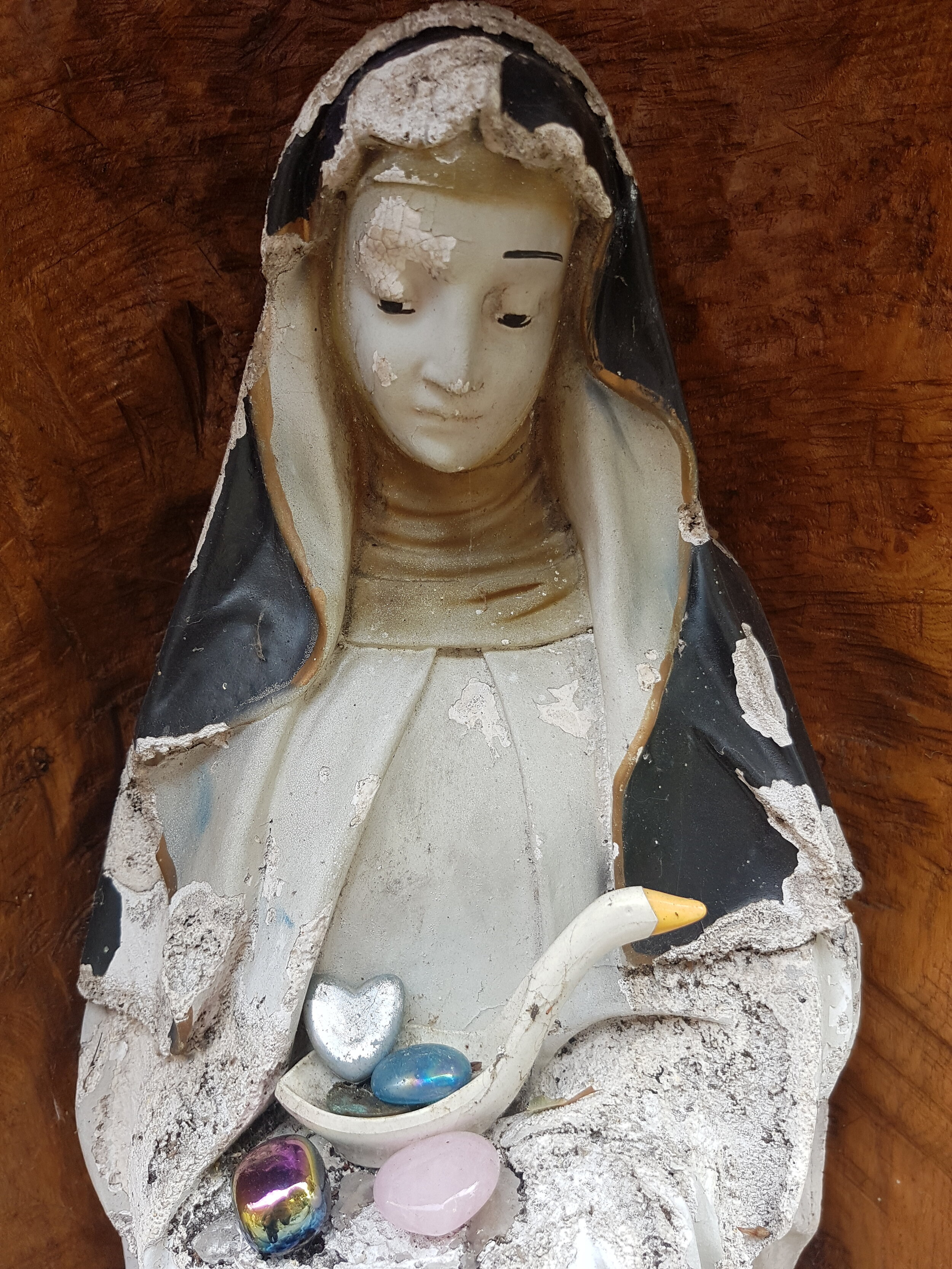
Redcross Mary
FURTHER RESOURCES AND A CALL TO ACTION!
Learn more about the Cross Bones Graveyard and the Winchester Geese here.

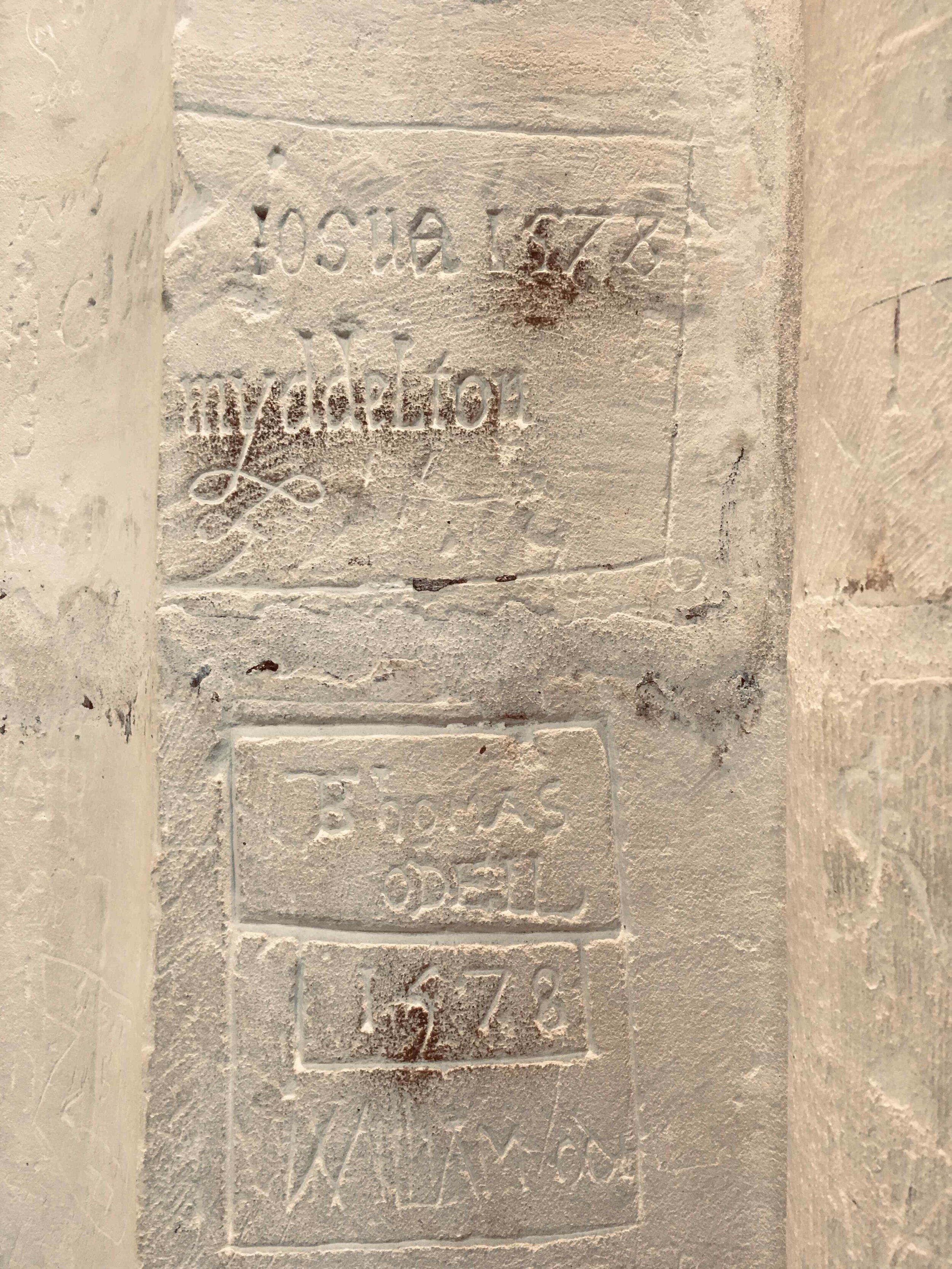
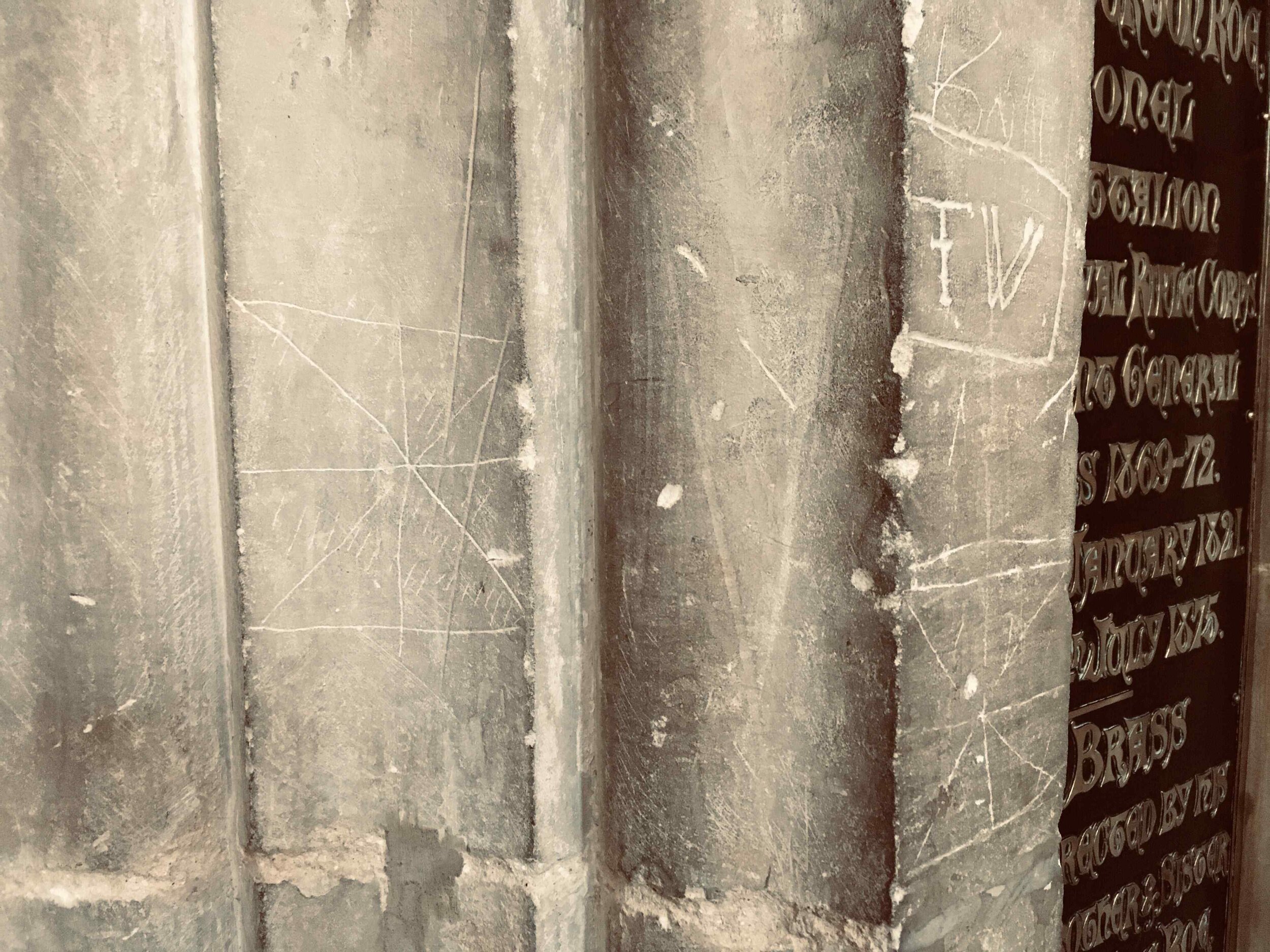
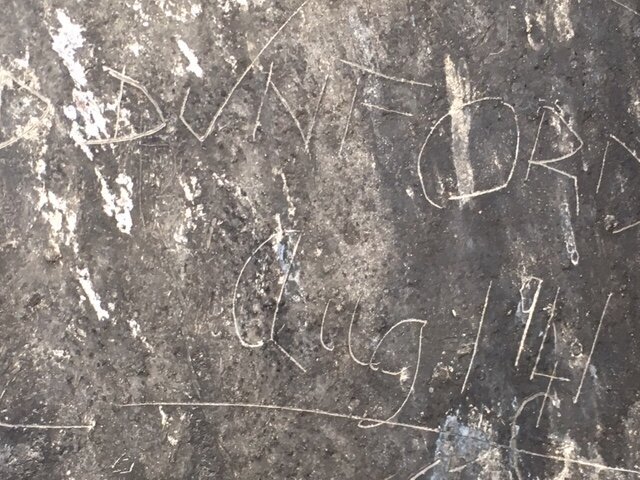
Crude Carvings: Graffiti in the Winchester Cathedral
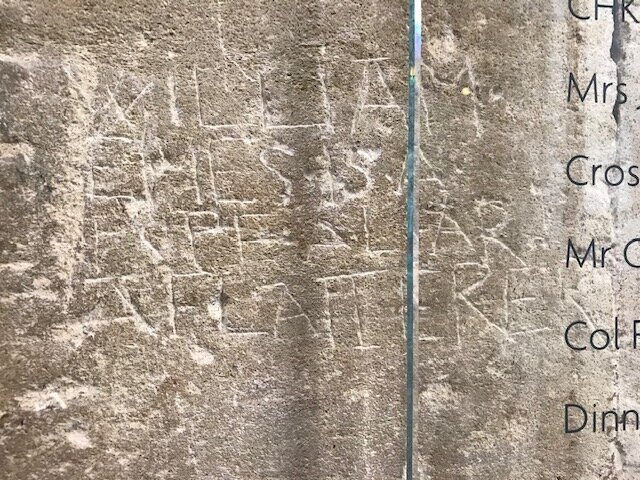
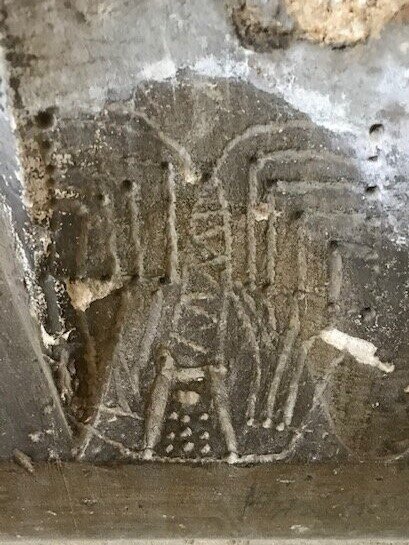
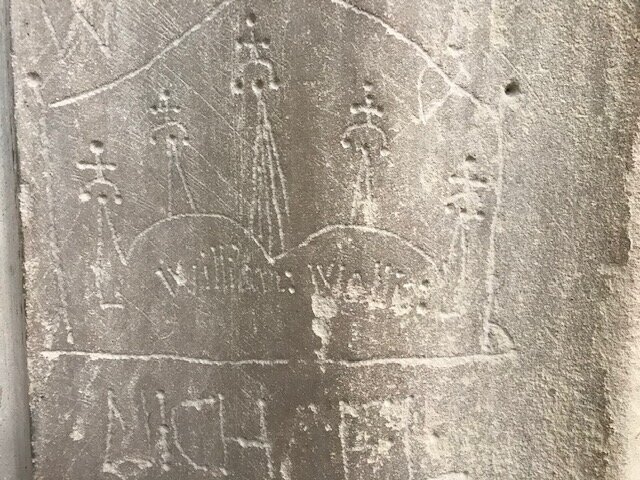
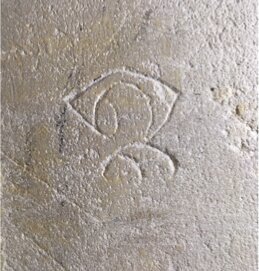
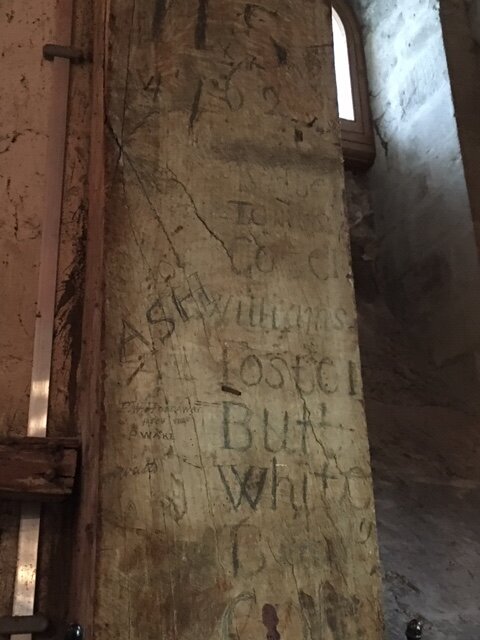
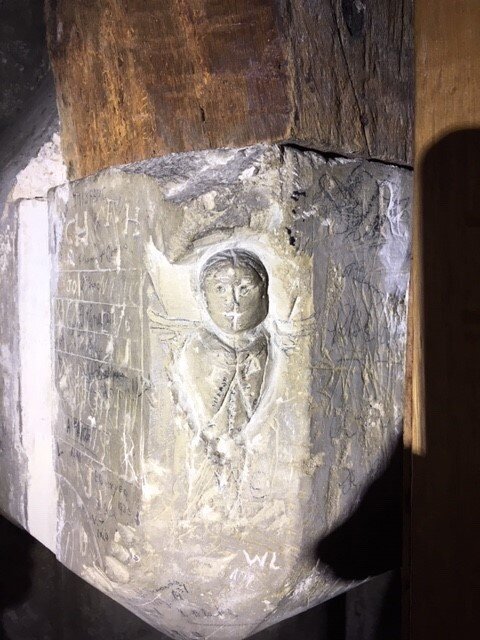
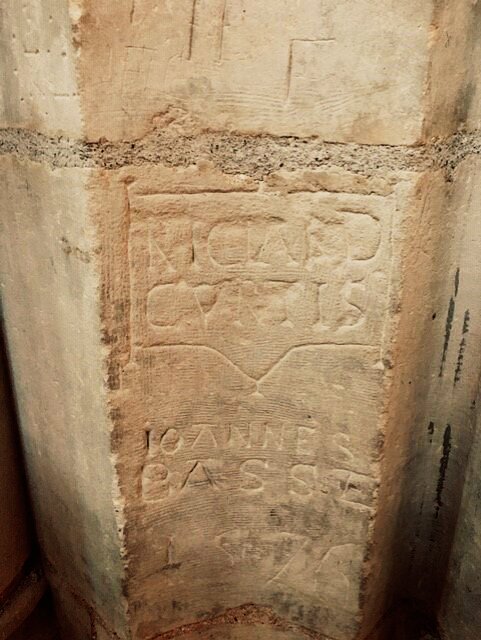
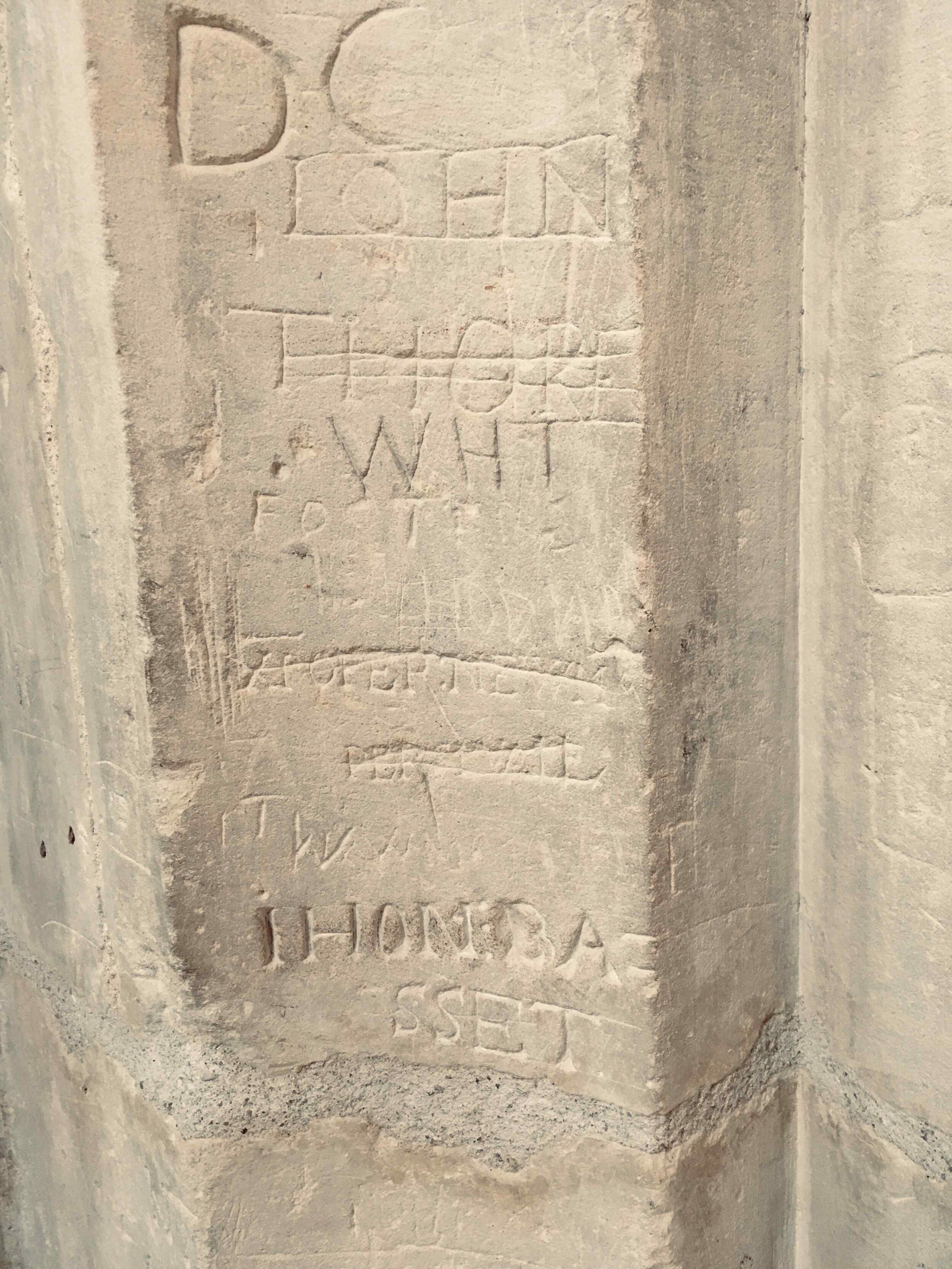
Throughout the Winchester Cathedral’s history, hundreds of people have made their mark on its walls. From the sophisticated to the lewd and rude, Dr Cindy Wood reveals the stories behind the carvings.
Throughout the Winchester Cathedral’s history, hundreds of people have made their mark on its walls. From the sophisticated to the lewd and rude, Dr Cindy Wood reveals the stories behind the carvings.
When most people see someone’s initials scratched into the wall of the cathedral, the carvings are dismissed as graffiti and vandalism. However, those letters tell a story about the Winchester Cathedral in centuries past and the people that walked under its vaulted ceilings. Is it history, vandalism, or both? Dr Cindy Wood explores the controversial topic.
Cindy is a Senior Lecturer at the University of Winchester and lead on the Graffiti project with Winchester Cathedral. She has always worked with material culture in churches, and other than graffiti, specialises in intercession for the soul in the later medieval period. Cindy teaches a variety of topics including medieval death, the Crusades, food and drink in the medieval and early modern periods, the medieval life cycle and other generic history modules.
Alongside this, she is also a Trustee of the Friends of Winchester Cathedral and Chair of the Friends of Clarendon Medieval Palace in Salisbury.
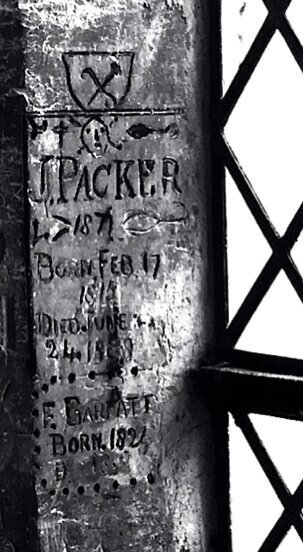
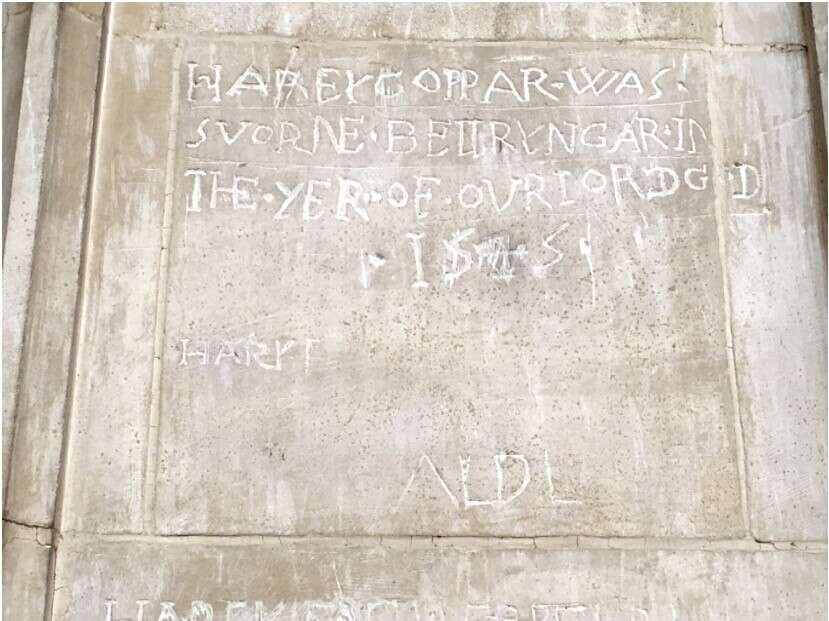
FURTHER INFORMATION & A CALL TO ACTION!
Earlier this year, Dr Cindy Wood held a lecture with the Churches Conservation Trust about the graffiti project at Winchester Cathedral. The recording of that lecture can be found here.
Do you have any photos of historical graffiti in the Winchester Cathedral or elsewhere in Hampshire? Share it with us on Instagram, Facebook, or Twitter!
Visit the Winchester Cathedral’s official website.